Disclosure: This content may contain affiliate links. Read my disclosure policy.
This three-tiered best bug spray system keeps me — mostly! —bug and bite free in New York’s backcountry every season
Having to constantly swat mosquitos and flies can really ding your day. Ticks and Lyme disease, especially in the northeast, only add another layer of worry.
I’m glad to say that, after years of constant hiking in the Catskills and Adirondacks, I’ve never had a single tick bite.
I put that down to my consistent application of the following three products.
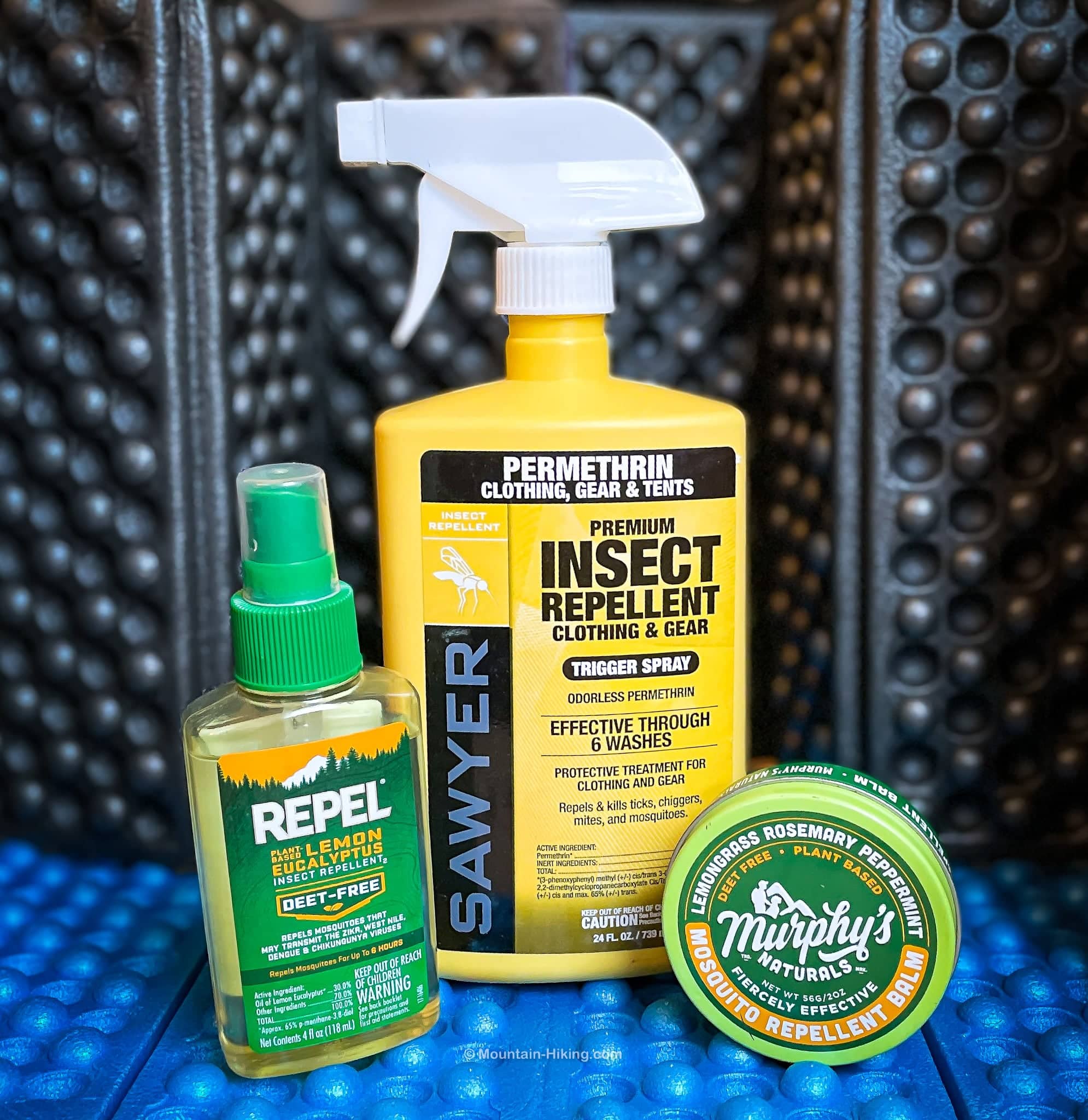
First Line of Defense: Permethrin
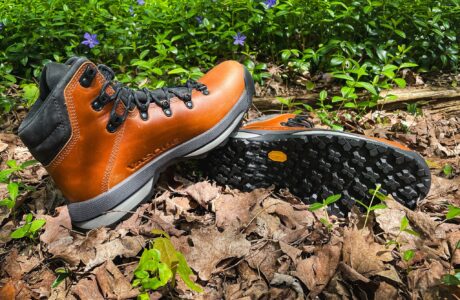
For clothing, I spray everything with Sawyer Premium Permethrin: pants, socks, teeshirts and caps. I also spray my hiking boots, backpack, and even my gaiters.
Permethrin works by destroying an insect’s nervous system. As soon as a bug crawls on your permethrin-treated clothing, it starts to die. (Permethrin is non-toxic to humans, however, and it breaks down quickly in the environment.)
Permethrin doesn’t stain or damage clothing, fabrics, plastics, or gear, and application lasts several washing cycles; even during tick season, I only reapply every 4-6 weeks.
It does have a mild chemical smell during application but, after drying, it’s 100% odorless.
I think of permethrin as my base layer for preventing tick borne diseases. It works great on all my hiking fabrics.
For skin, you need a different tool…
The Best Bug Sprays for Hiking
I use two products on all my bug-season hikes:
- a spray
- a balm
At the trailhead, before I begin my hike, I spray myself head-to-toe with Repel. However, to save a little weight and space, I leave that bottle behind.
On the trail, if I need to reapply, I carry the much smaller and lighter tub of Murphy’s balm (which, honestly, smells nicer). This tub is so small, it fits in one of my backpack’s side pouches, so it’s easy to pull out if I need it.
Both these products are all natural and DEET-free. I know many hikers prefer DEET products. Here’s why I prefer Repel type products…
DEET vs Lemon Eucalyptus
DEET is extremely effective, and there’s a reason it’s been the gold standard for decades. It works by interfering with an insect’s ability to interpret the chemical signals we constantly give off, like carbon dioxide and skin odors. Mosquitoes and ticks can still sense that something is there, but DEET scrambles the final approach. It makes it difficult for them to confirm you as a target or commit to landing. If they do land, it also repels them on contact. It doesn’t kill bugs. It just makes you a very confusing and unappealing place to be.
Repel’s active ingredient comes from Oil of Lemon Eucalyptus, specifically a refined compound known as PMD. Rather than just scrambling signals, it creates a kind of chemical boundary that insects prefer not to cross. It still affects their odor receptors, but the effect feels more like a clear “keep away” message than confusion. In practice, mosquitoes tend to veer off earlier, before they get close enough to investigate. It’s less about masking you and more about making your immediate space undesirable.
The reason I prefer it is simple. It works well enough for most of my hikes, and it’s far more pleasant to use. It’s lighter on the skin, smells clean instead of chemical, and it doesn’t mess with gear. DEET can degrade plastics, watch faces, and sunglasses. That alone is a dealbreaker for me on longer days when I’m handling poles, cameras, or my phone.
For most days in the Catskills and ADKs, lemon eucalyptus hits the sweet spot between effectiveness and comfort.
Where to Spray the Best Hiking Bug Sprays?
Any exposed skin, including the font and back of your arms and legs, and your neck (front and back).
I even spray the top of my head, and the brim of any cap I’m wearing.
For your face, spray onto the palm of your hand and then rub your cheeks, nose bridge, forehead, and ears. Keep the oils away from your eyes and mouth.
One easy-to-overlook spot needs special attention: the back of your arms just above the elbow, if exposed — it’s a weird place you might not think to spray, but black flies will find those tasty patches instantly and leave you scratching for days.
My daughter has super sensitive skin. Even a quick nip from a mosquito will raise a massive welt on her arm or leg. She doesn’t love the way the lemon-eucalyptus spray smells but it keeps her bite-free, which she admits (reluctantly) is a plus.
BTW, you might also enjoy…
- CATSKILLS › Catskills Fall Foliage 2026
- ADIRONDACKS › Hike Cascade & Porter
- STAY › Find Your Perfect Catskills Stay
- UPDATED › Best Bug Spray & Repellent for Hikers
- LEARN › Camping in the Catskills
- Follow › My Instagram @TotalCatskills
- Follow › My Substack @TotalCatskills
- Follow › My writing for Times Union
Other Options
If you don’t like the way these bug sprays smell, a friend recommends Nantucket Spider Natural Bug Repellant. I haven’t used it myself, so I can’t vouch for it personally, but it gets great ratings on Amazon.
An inexpensive headnet is also an option during deep black fly season, especially in the Adirondacks.
Read More
- Read about ticks and tick prevention
- Read about black fly season and solutions
- And for when your hike is over, try these best post-hike hacks
Get full access…
Get instant access to the full version of this site and enjoy great supporter benefits: full galleries, full trail notes, early access to the latest content, and more.
Hot on the website right now…
Follow for more…
Follow my @TotalCatskills content on Instagram for regular hiking inspo and safe, inclusive community.