Disclosure: This content may contain affiliate links. Read my disclosure policy.
If you’ve hiked the Catskills over the past decade, you’ve seen the changes that have come with the increase in outdoor recreation, especially since COVID…
Parking lots fill up before sunrise. Cars line narrow roads. Summits that used to feel quiet now host steady streams of people. Our trails are widening, braiding, and eroding. The pressure is constant and increasing.
Since I started hiking in 2018, this shift has been unmistakable. Even the summit of Rocky Mountain — one of the hardest Catskills summits to get to because here are no marked trails — has changed radically due to increased foot traffic that has resulted in an entire network of unofficial trails.
Now, for the first time, New York State is seriously considering putting limits on how many people can visit some of the most popular hiking areas in the Catskills and Adirondacks.
Here’s what’s being proposed, and how it might affect us all…
What’s Being Proposed
The New York State Department of Environmental Conservation (DEC) has released two major reports focused on managing increasing visitation in:
- The Adirondack High Peaks Wilderness
- The Kaaterskill Clove region in the Catskills
These reports don’t set policy yet. They do lay out recommendations, and some of those recommendations are significant.
In the Adirondacks (briefly)
- Daily visitor caps at major trailheads
- Around 400 people per day at Adirondack Loj and South Meadows
- Around 240 people per day at Cascade Mountain
- Possible permit system in the future
In the Catskills (the bigger local story)
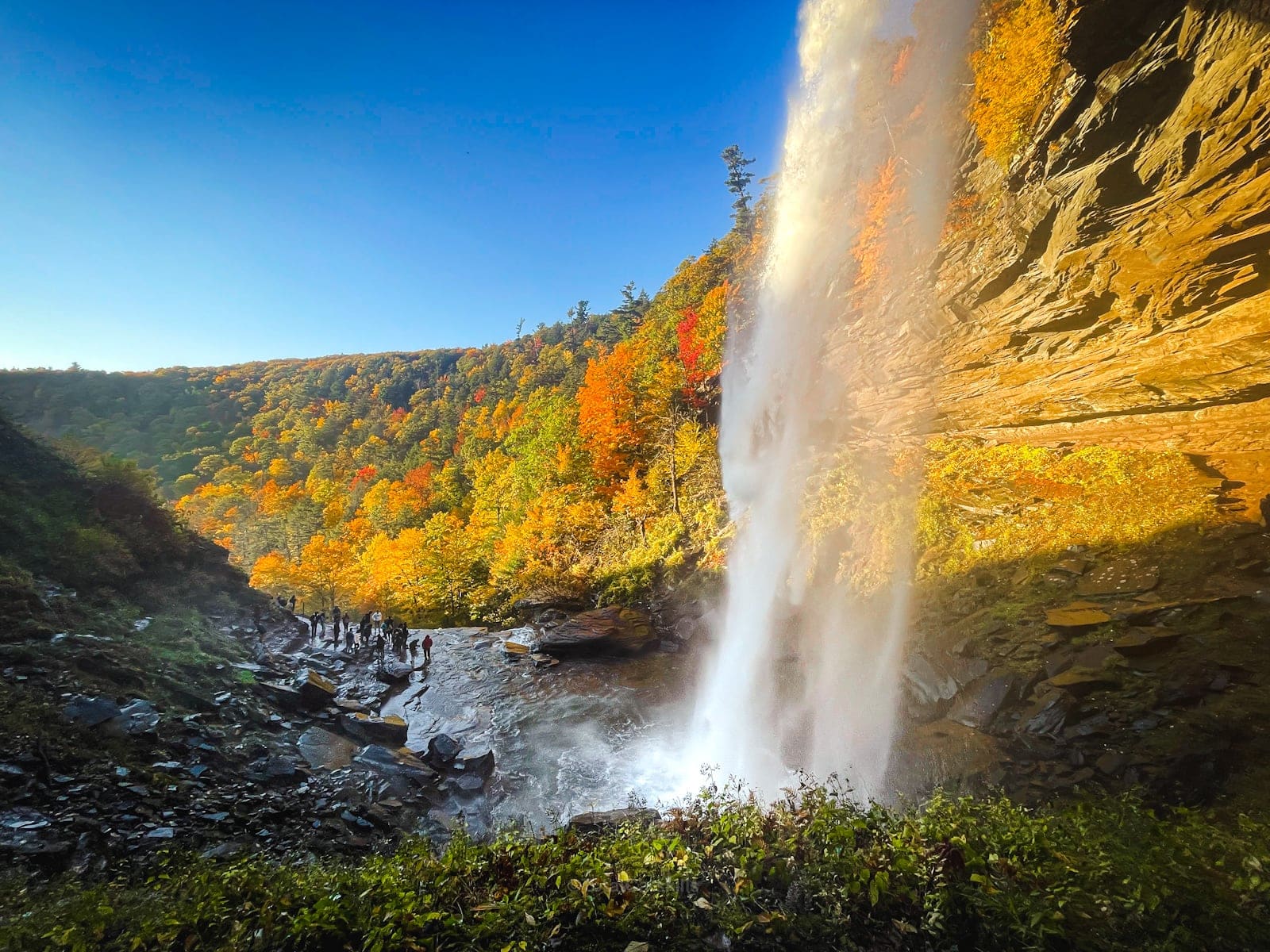
The focus is Kaaterskill Clove, home to Kaaterskill Falls.
- Current reality:
- ~860 visitors on summer weekdays
- ~1,850 on weekends and holidays
- Up to ~3,000 on peak days
- Proposed capacity:
- ~1,000 visitors per day
To close that gap, the report recommends:
- A reservation system during peak season
- Timed entry windows
- Staffed entry points
- Changes to parking and access, including limiting roadside entry
Right now, we all can just show up and hike. If implemented, these changes would be a fundamental shift.
BTW, you might also enjoy…
- NEW › Winter Skincare for Hikers
- CATSKILLS › Best Catskills Waterfalls
- STAY › Find Your Perfect Catskills Stay
- ADIRONDACKS › Hike Van Hovenberg
- ENTERTAINMENT › Best & Worst Hiking Movies
- Follow › My Instagram @TotalCatskills
- Follow › My Substack @TotalCatskills
- Follow › My writing for Times Union
Why This Is Happening?
This isn’t coming out of nowhere. It’s a response to problems that have been building for years.
“We have been calling for a comprehensive, data driven Visitor Use Management plan for Kaaterskill Clove for years, and this report is a significant move in that direction,” said Jeff Senterman, Executive Director of the Catskill Center.
Safety
Kaaterskill Falls and Clove has become one of the most dangerous hiking areas in the Catskills.
- Roadside parking along Route 23A creates real hazards
- Many visitors arrive unprepared for steep terrain and exposure
- More than 100 rescues have occurred in the area over the past decade
- Multiple fatalities since 2015
This is not theoretical risk. It’s real and ongoing.
Environmental Damage
The land is taking a hit. I’ve see it happen with my own eyes.
- Trails are eroding and widening
- Vegetation is being trampled
- Informal paths are spreading
- Sensitive habitats, including those used by montane birds, are under pressure
These are slow changes, but they add up. And they’re hard to reverse.
The Experience Itself
This one is harder to quantify, but just as real. Most people don’t go to Kaaterskill Falls hoping to share it with hundreds or thousands of others. And yet, that’s often what happens.
The reports found that once a certain number of people are in view, visitors start to feel crowded. The sense of being in a natural place starts to slip.
At some point, it stops feeling like a hike and starts feeling like a public event.
The Big Question: Limits vs Access
This is where things get complicated.
The Case for Limits
- Protect the resource before damage becomes permanent
- Reduce dangerous overcrowding
- Improve the overall experience
- Proven model in places like Peekamoose Blue Hole
From that perspective, limits aren’t about restriction. They’re about preservation.
The Case Against
- Public land should remain freely accessible
- Reservation systems add friction and exclude spontaneity
- Many visitors plan trips the same day
- Enforcement could be messy, especially with multiple entry points
- Local economies depend on steady visitor flow
There’s also a broader concern. Once permits are introduced, it can feel like a line has been crossed.
My Take
I’m okay with limits. Not because I want fewer people out there, but because I’ve watched what happens when use outpaces management.
The Catskills are not being “loved to death” in some abstract way. They are being used, heavily, and in very specific places, that use is starting to break things.
Kaaterskill Falls is the most obvious example, but it’s not the only one. What’s known as The Bushwhack Range — Friday, Balsam Cap, Rocky, Lone — is now heavily herd-pathed.
At the same time, limits alone aren’t enough. If the state is going to restrict access, it also needs to think bigger and react faster.
- Better infrastructure. Smarter parking, safer access points, hardened trails where appropriate
- Faster studies and implementation. Some of this has been studied for years. Action should not lag that far behind reality
- More trails in the right places. Especially for heavily trafficked bushwhack peaks in the Catskill 3500. If people are going to go, give them a durable route instead of letting a dozen herd paths develop
Right now, we’re reacting late instead of planning ahead.
What Happens Next
Nothing changes immediately.
- DEC has not adopted these recommendations yet
- Public comments are open until June 1, 2026
- Virtual meetings are scheduled for April 22 and 29, 2026
This is the input phase. Decisions will come later.
What This Might Mean for Your Hikes
If these recommendations move forward, a few things could change:
- You may need a reservation to visit Kaaterskill Falls during peak season
- Spontaneous trips could become harder at the most popular locations
- Parking chaos may decrease
- Crowds at peak destinations could be noticeably smaller
And for many hikers, especially those who value quieter experiences, that last point matters.
The Bigger Picture
The Catskills are not getting less popular. More people are discovering these mountains every year. And that’s a good thing. But it also means the old model has to change. Right now, we can show up, park wherever we can, hike wherever we want. But that can’t scale forever.
The question isn’t whether people will keep coming. They will.
The question is how we make sure these places can handle our foot traffic and still feel like the places we came for in the first place.
Read More
Get full access…
Get instant access to the full version of this site and enjoy great supporter benefits: full galleries, full trail notes, early access to the latest content, and more.
Hot on the website right now…
Follow for more…
Follow my @TotalCatskills content on Instagram for regular hiking inspo and safe, inclusive community.